Machine Learning Methods for Time Series
Machine learning methods for time series, worked on energy and supply chain data, in two books. Each chapter pairs a narrative page with a companion notebook, so that every figure and table in the text is computed by code that the reader can run.
Read Volume 1 online Read Volume 2 online Both books
Volume 1. Finding Structure in Time Series
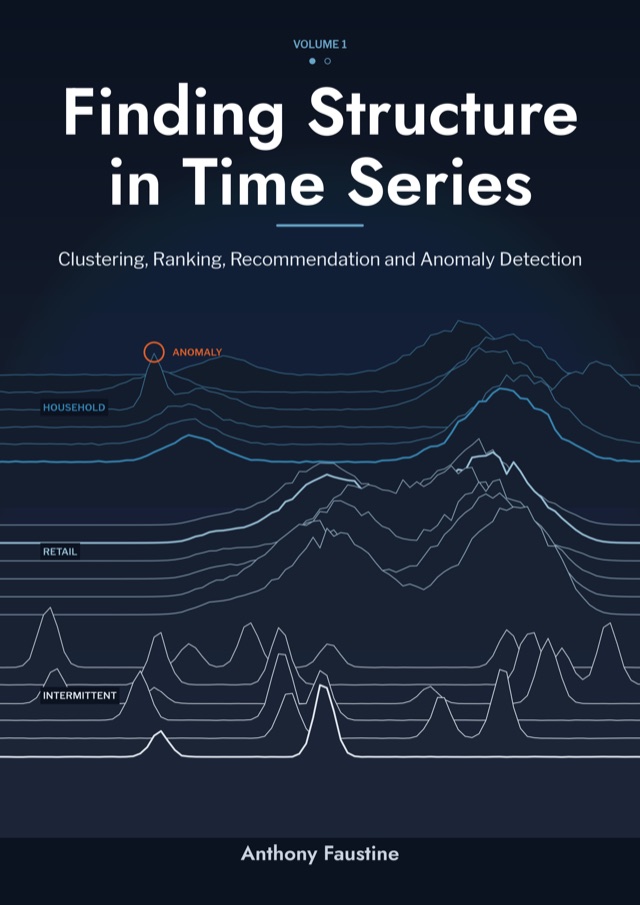
Clustering, Ranking, Recommendation and Anomaly Detection. The first volume shows how to find structure in many time series at once: which series behave alike, which ones deserve attention first, which cases are similar to a new one, and which observations do not belong. The worked examples follow the smart-meter signal to decisions on the low-voltage distribution network.
Part 5. Clustering
- Clustering Load Profiles
- Validating Clusters
- Clustering Metered Households
- Network Risk
- Customers and Connections
Part 6. Retrieval, Ranking and Recommendation
- Foundations of Retrieval, Ranking and Recommendation
- Retrieval for Connection Requests
- Ranking Transformers and Violations
- Recommending Mitigation Measures
Part 7. Anomaly Detection
- Foundations of Anomaly Detection
- Meter Data Quality and Customer Behaviour
- Non-Technical Loss and Changes over Time
Volume 2. Forecasting for Operations
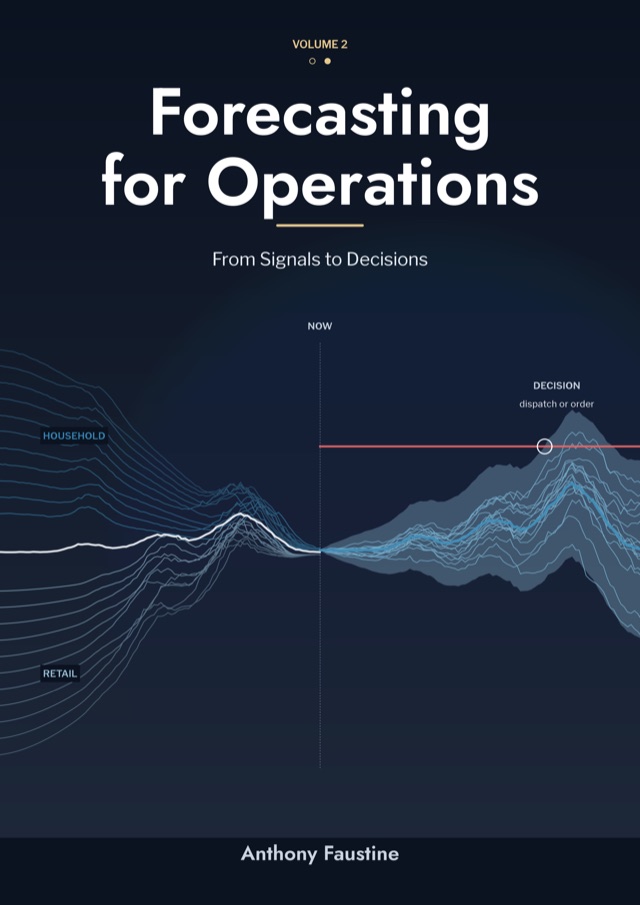
From Signals to Decisions. The second volume covers what the signals allow before a model is chosen, the families of forecasters, and how a forecast is evaluated without fooling oneself.
Part 8. Forecasting
- Signals
- Forecasters and Their Evaluation
The web editions grow chapter by chapter, as each is written, run and reviewed.
Built on open-source libraries
The methods are implemented in libraries that can be installed and reused outside the books.
| Library | Role in the books |
|---|---|
| Milia | Clustering of load profiles, retrieval of similar cases and anomaly detection |
| Popo | Low-voltage power flow and state estimation for network studies |
| Twiga | Point and probabilistic forecasting |
See the Software page for installation and documentation.
Status
Both volumes are in progress. The other titles are listed on the Books page.